
Are Lionfish Moving Deeper Around Mahahual in the Mexican Caribbean?
Updated: Jul 1

For years, lionfish have been one of the biggest threats to Caribbean reef ecosystems. Since their arrival in the region, divers, fishermen and conservation groups have worked hard to reduce their numbers through regular culling efforts.
In Mahahual, these efforts have had a noticeable impact on many of the shallow reefs. Lionfish are still present, but they are often less common than they were during the early years of the invasion.
However, during recent dives, I've noticed something interesting.
While lionfish can still be found on shallow reefs, I am seeing significantly higher numbers on deeper reef structures, particularly below 40 metres. On one recent dive, I encountered and removed seven lionfish in little more than a minute from a single section of reef. The density of lionfish on that dive was noticeably higher than I would normally expect to see on Mahahual's shallower reefs.
This observation raises an important question:
Are lionfish finding refuge in deeper water?
Recent reports from Quintana Roo suggest that lionfish are increasingly being found on deeper reefs beyond the range of most recreational divers. This mirrors scientific studies from elsewhere in the Caribbean, where healthy lionfish populations have been documented on mesophotic reefs that receive far less fishing pressure and relatively few organised culling efforts.
A recent article by Riviera Maya News also highlighted reports of increasing lionfish numbers on deeper reefs off the Quintana Roo coast, adding further weight to these observations. You can read their report here: https://www.rivieramayanews.mx/lionfish-moving-away-from-reefs-into-deeper-waters-off-quintana-roo/
If this trend is occurring around Mahahual, it presents an important challenge for reef conservation.
Most lionfish control programmes focus on depths accessible to recreational divers. However, deeper populations may continue to reproduce and act as a source of new lionfish for shallower reefs over time. These deeper habitats remain largely unexplored and are rarely visited compared with the popular dive sites closer to shore.
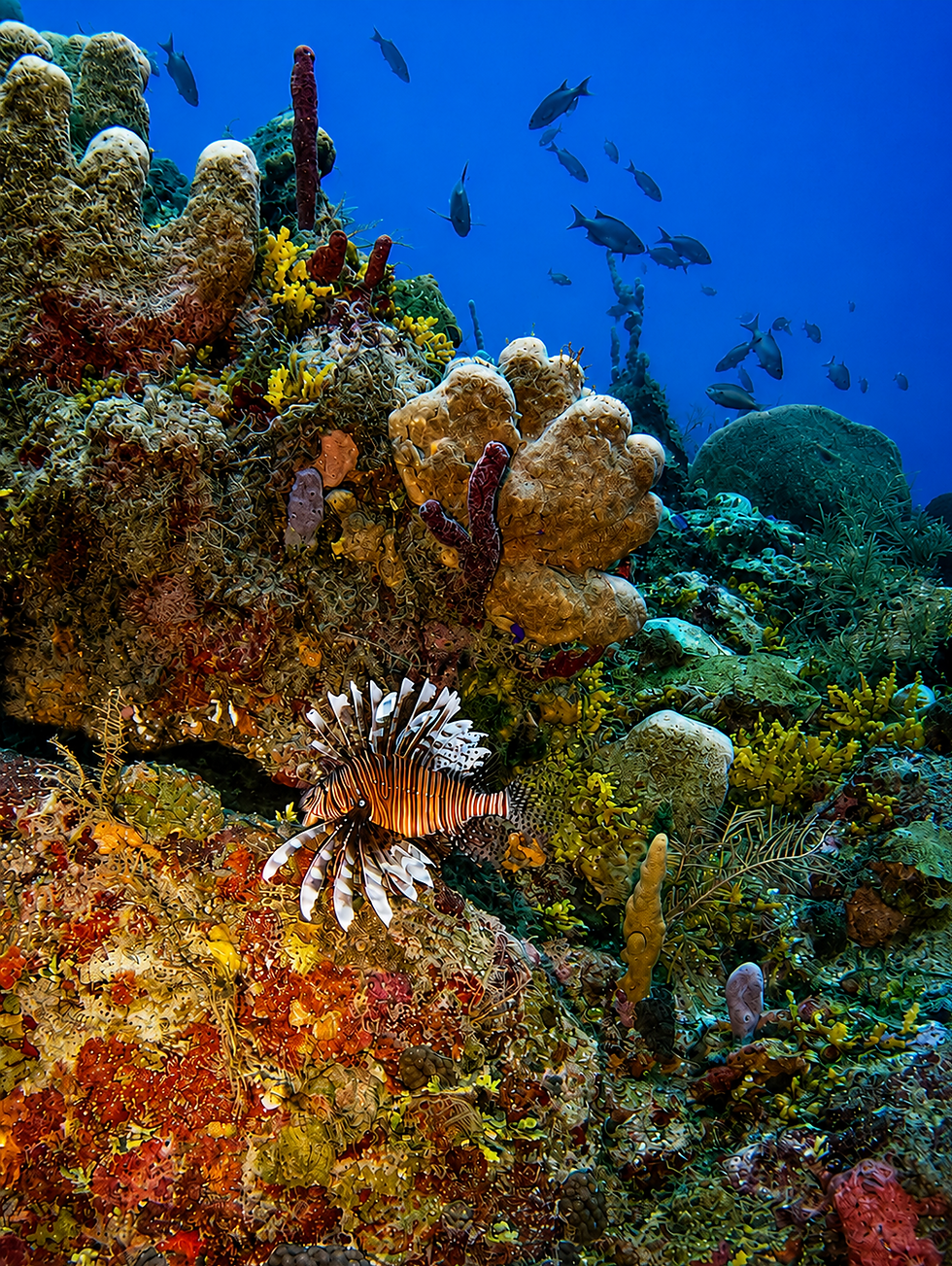
For technical divers, this creates both an opportunity and a responsibility.
Technical diving provides access to parts of the reef that very few people ever see. While these dives are often undertaken for exploration and adventure, they can also provide valuable observations about the health of deeper reef ecosystems and the distribution of invasive species such as lionfish.
At this stage, my observations are anecdotal rather than scientific research. However, after spending hundreds of hours diving the reefs around Mahahual, the difference between shallow and deeper lionfish numbers is becoming increasingly difficult to ignore.
As I continue exploring deeper reef systems around Costa Maya, I'll be paying close attention to lionfish abundance, behaviour and habitat use. It will be interesting to see whether this trend continues and what it might mean for the future management of lionfish in the region.
Have you noticed similar patterns while diving elsewhere in the Caribbean? I'd be interested to hear about your observations in the comments below.


Comments